Same-Day Spring Replacement Available | San Francisco Bay Area | Call 650-993-1457
📞 Call Now
New garage door torsion spring installed by a Great Garage Door Service technician in the Bay Area
San Francisco Bay Area — Spring & Torsion Specialists

Garage Door Spring Replacement
Same-Day Torsion & Extension Spring Repair Across the Bay Area.

A broken spring is the most common reason a garage door suddenly won't open — and the one repair you should never force or attempt yourself. We replace torsion and extension springs across the Bay Area, usually the same day, with correctly sized parts, a free estimate, and an upfront price you approve before we start.

Same-Day
Service
Free
Estimates
Upfront
Pricing
Licensed
& Insured
Insured & Bonded
General Liability Insurance
Workers' Comp Covered
Upfront Pricing
Free Estimates
Spring & Torsion Specialists
Quick Answer

Garage door spring replacement is the repair of the torsion or extension spring that counterbalances your door's weight, letting it open and close safely. When a spring breaks, the door becomes too heavy to lift and unsafe to force. We replace broken springs across the Bay Area, usually same day, with free estimates and upfront pricing approved before any work begins.

Symptoms

Is This Your Door? Signs of a Broken Spring

If your garage door suddenly won't open, feels far heavier than usual, or made a loud bang before quitting, a broken spring is the most likely cause. Here are the signs we see most often — if one or more matches your door, the spring system is almost certainly the problem.

!
A loud bang or "firecracker" pop
A torsion spring breaking releases stored energy all at once. Homeowners often describe it as a gunshot or firecracker from the garage — sometimes heard from inside the house overnight.
!
The door won't lift, or rises then drops
With no working spring, nothing counterbalances the weight. The door may not move at all, or lift a foot and slide back down because the opener can't carry it alone.
!
The opener strains or stops halfway
A struggling, grinding opener that stalls partway up is often blamed for the problem when the real cause is a broken spring forcing the motor to lift the full door weight.
!
A 2–3 inch gap in the torsion coil
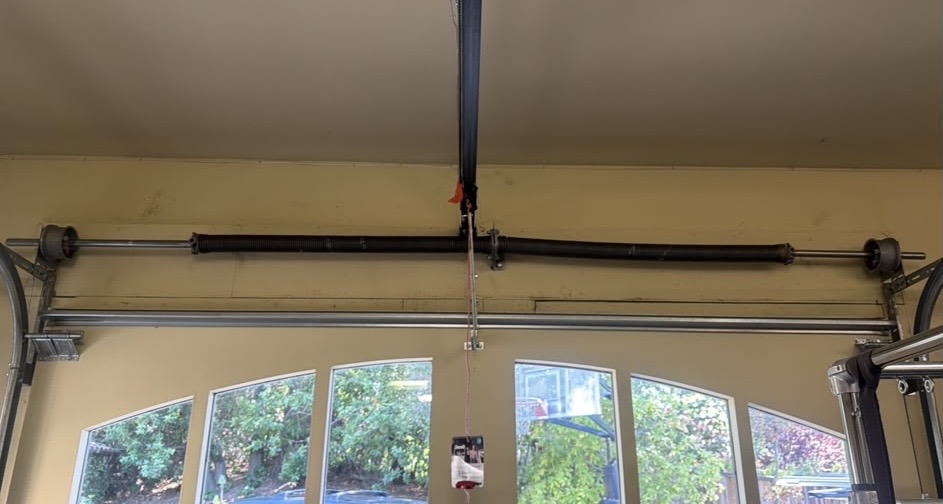
Look at the spring on the shaft above the door. A clear two-to-three-inch separation in the coil is the classic visual confirmation that a torsion spring has snapped.
!
The door lifts crooked or one-sided
On a door with two springs or a failing cable, one side can rise faster than the other, leaving the door hanging at an angle and binding in the tracks.
!
The door slams down hard and fast
A weak or broken spring no longer slows the descent, so the door drops faster and heavier than normal — a safety hazard for anything, or anyone, underneath.
How We Diagnose It

How a Technician Confirms It's the Spring

A door that won't open isn't always a spring — it can be a snapped cable, a failed opener, or a door off its track. Before we replace anything, our technician works through a quick, logical check so you only pay for the repair you actually need.

1
Spring vs. cable vs. opener
We rule out the look-alikes first. A snapped lift cable, a stripped opener gear, or a door knocked off-track can all mimic a broken spring — each has a different fix, so we confirm the true cause before quoting.
2
Inspect both springs & hardware
We check the full spring system, not just the one that failed. On a two-spring door, we look at the condition and cycle wear of both, plus the cables, drums, and bearings that work alongside them.
3
Weigh & balance test
After replacement, we disconnect the opener and test the door by hand. A correctly balanced door holds its position halfway and moves smoothly — proof the new spring is sized right for your door's weight.
Why Springs Fail

Why Garage Door Springs Break

Springs don't fail randomly — they wear out on a predictable curve, and a few local conditions speed that up. Understanding why yours broke helps you choose the right replacement and get more life out of the next set.

Normal cycle fatigue
Springs are rated in cycles, and a standard spring is rated for about 10,000 cycles — one open and one close each. At three to four uses a day, that's roughly seven to ten years before metal fatigue simply runs its course and the spring snaps.
Inland heat accelerates fatigue
In the hotter inland parts of the Bay Area, a garage can swing through wide temperature extremes. Repeated heating and cooling of the steel speeds up metal fatigue, so springs there often reach the end of their cycle life sooner.
Coastal salt-air corrosion
Closer to the coast and the bay, salt air corrodes spring steel and pits the surface. Corrosion creates weak points where the spring cracks early — which is why galvanized or coated springs are a smart choice near the water.
Lack of lubrication
Dry, un-lubricated coils grind against themselves on every cycle, adding friction and wear the spring was never meant to take. A few minutes of lubrication a couple times a year is one of the simplest ways to extend spring life.
One spring strains the other
On a two-spring door, when one breaks the remaining spring has to carry a load it was never sized for alone. That overload accelerates its wear, which is why a second spring so often fails within months of the first.
Undersized or mismatched springs
A spring that was never matched correctly to the door's weight — common after a cut-rate prior repair — works harder than its rating allows and fails early. Sizing the spring to the actual door is what makes the replacement last.
The Right Repair

A Correctly Sized Spring, Installed and Balanced

The fix isn't just swapping in any spring — it's installing the right spring for your door's weight and cycle needs, then balancing the system so the door runs smoothly and the opener isn't overworked. That's what makes a spring replacement actually last.

New garage door torsion spring installed by a Great Garage Door Service technician in the Bay Area
Honest Comparisons

Two Decisions Worth Understanding

Before you book a spring repair, two questions usually come up: should you replace one spring or both, and should you ever attempt it yourself? Here's our straight answer to each.

Single spring vs. matched pair

On a two-spring door, both springs wound and unwound together for years, so they reach the end of their life at nearly the same point. The one we don't replace on a single-spring repair is the spring that tends to fail next — often within a few months — which is how a cheaper one-spring fix quietly turns into a second visit. Running a new spring beside a fatigued one also leaves the door unbalanced and forces the new spring to carry more than its share.

Replacing one spring is cheaper today; replacing both is almost always the better value over the life of the door.

Our straight take from the field: a single-spring repair costs less today, but the untouched second spring is the one that brings you a repeat call. On a two-spring door we replace both as a matched pair — equal cycle life, balanced lift, and no second service call a few months later.
DIY vs. professional

Garage door springs are wound under extreme tension and counterbalance hundreds of pounds of door weight. Replacing one means controlling that stored energy with proper winding bars and matching the spring precisely to the door — then re-balancing the whole system.

The parts can be bought online, but the tension, the sizing, and the balancing are where a DIY job goes wrong.

Our honest take: this is one repair where professional installation isn't upselling — it's the safe, correct way to handle a high-tension part.
Upfront Pricing

How We Price a Spring Replacement

We don't believe in surprise invoices. Every spring replacement starts with a free estimate and an upfront, written quote you approve before we touch the door — so you always know the price first. Rather than post a single number that may not fit your door, here are the honest factors that shape it.

Single spring or a matched pair
Replacing one spring costs less than two. On a two-spring door we'll explain why a matched pair is usually the better long-term value, but the choice is yours.
Door weight and size
A heavy insulated or oversized door needs a stronger spring than a light single-car door. The spring has to match the actual weight it counterbalances.
Standard vs. high-cycle springs
A standard spring is rated around 10,000 cycles; high-cycle springs run 25,000 or more. The doors where we most often suggest the upgrade are the ones cycled many times a day — the main entry on an attached garage — and heavy insulated or solid-wood doors, where the extra cycle life genuinely pays back. For a door used a few times a day, a standard spring is usually the right call, not an upsell.
Custom or non-standard sizing
Unusual door dimensions or specialty hardware can require custom-sized springs that need to be sourced. We'll tell you upfront if that affects the timeline or price.

The bottom line: you get a free estimate, an upfront price approved before any work begins, and no surprises on the invoice.

Safety First

Why Spring Replacement Isn't a DIY Job

We're not trying to scare anyone away from their own garage — we just want you to make the call with the full picture. A garage door spring stores a remarkable amount of energy, and that's exactly what makes it a job for a trained technician.

  • A wound torsion spring holds the energy needed to lift a door that can weigh several hundred pounds. Released without control, that force can injure hands, wrists, and face.
  • Winding and unwinding a torsion spring requires the correct winding bars and technique. Common household tools slipping under that tension is a frequent cause of DIY injuries.
  • The spring must be matched to the door's exact weight. An under- or over-sized spring leaves the door unbalanced, strains the opener, and can fail again quickly.
  • After the swap, the door has to be re-balanced and the cables and drums checked. Skipping that step is how a "fixed" door comes back off-track or crooked.

None of this means you have to live with a broken door for long — it just means the safe path is a quick visit from someone who does this every day. We carry the parts, the tools, and the experience to do it right in a single trip.

Broken Spring? Get a Free Estimate Today
Same-day spring replacement across the Bay Area — torsion and extension springs replaced by licensed, insured technicians with upfront pricing and no surprise fees.
Call 650-993-1457 Request Online Estimate
Spring Replacement FAQ

Garage Door Spring Replacement Questions

Straight answers to the questions Bay Area homeowners ask us most about broken and replacement garage door springs.

How do I know my garage door spring is broken?
The most common sign is a loud bang from the garage — often described as a firecracker pop — followed by a door that won't open or that feels extremely heavy. You may also see a two-to-three-inch gap in the torsion spring above the door, a door that lifts crooked or only on one side, or an opener that strains and stops partway. If the door rises a foot and then drops, the spring is no longer counterbalancing the weight.
Can you replace a garage door spring the same day?
In most cases, yes. Broken springs are one of the most common repairs we do, and our technicians carry the standard torsion and extension spring sizes for typical residential doors. We confirm the correct spring for your door's weight and size on site and replace it, usually the same day. Custom or high-cycle springs in unusual sizes can occasionally need to be sourced first.
Should I replace one spring or both?
On a two-spring door we usually recommend replacing both. Both springs have gone through the same number of cycles, so when one breaks the other is typically close behind. Replacing them as a matched pair keeps the door balanced, gives both springs the same cycle life, and avoids a second service call within months when the older spring fails too.
Torsion or extension springs — which does my door have?
Torsion springs mount on a metal shaft above the door opening and wind up to lift the door. Extension springs run along the horizontal tracks on each side and stretch as the door closes. Most modern doors use torsion springs because they balance the load more smoothly and last longer. We service both and confirm which type you have during the free estimate.
Is it safe to open my garage door with a broken spring?
It is not recommended. With a broken spring the door is no longer counterbalanced, so the full weight rests on the opener and cables. Forcing it can damage the opener, snap a cable, or pull the door off its track, and a heavy panel can drop suddenly. Leave the door closed and call a technician rather than trying to lift it by hand or with the opener.
How long do garage door springs last?
Springs are rated by cycles, with one cycle being one open and one close. A standard spring is rated for about 10,000 cycles. At three to four cycles a day, that works out to roughly seven to ten years of typical use. High-cycle springs are rated for 25,000 cycles or more. Heat, salt-air corrosion, and skipped lubrication can shorten that lifespan.
Why shouldn't I replace a garage door spring myself?
Garage door springs are under extreme tension and counterbalance hundreds of pounds of door weight. Winding or unwinding a torsion spring with the wrong tools, or releasing that energy unexpectedly, can cause serious injury. The job also requires matching the spring precisely to the door's weight and balancing the system afterward. A trained technician has the winding bars, the correct replacement parts, and the experience to do it safely.
Do you offer a warranty on spring replacement?
Yes. Our spring replacements are backed by a workmanship warranty, and the springs we install carry their own manufacturer rating. We'll explain exactly what's covered before any work begins so there are no surprises.
Do you replace garage door springs in my area?
We replace garage door springs across the San Francisco Bay Area, including San Jose, San Francisco, Palo Alto, Redwood City, Mountain View, and the surrounding Peninsula, South Bay, and North Bay communities. Call us with your city and we'll confirm same-day availability.
What does garage door spring replacement cost?
Cost depends on a few honest factors: whether you replace one spring or a matched pair, the weight and size of your door, and whether you choose standard or high-cycle springs. Rather than quote a number that may not fit your door, we give a free estimate and an upfront, written quote before any work starts — so you approve the price first and there are no surprises.
Where We Work

Same-Day Spring Replacement Across the Bay Area

We replace garage door springs throughout the Bay Area. Find your city below for local same-day service, or see all of our garage door services.

Get in Touch

Get My Free Spring Estimate

Same-day spring replacement available across the Bay Area. Free estimates and upfront pricing on every torsion and extension spring repair — no obligation, no pressure. Call 650-993-1457 or send the form and we'll confirm your visit.

📞
Phone
Same-day spring service available — call anytime
Email
We respond within a few hours during business hours
📍
Service Area
San Francisco Bay Area
South Bay, Peninsula, San Francisco, North Bay, and surrounding communities
📅
Hours
7 Days a Week
Same-day appointments available — including weekends
Last updated: June 2026