Same-Day Garage Door Opener Repair | San Francisco Bay Area | Call 650-993-1457
📞 Call Now
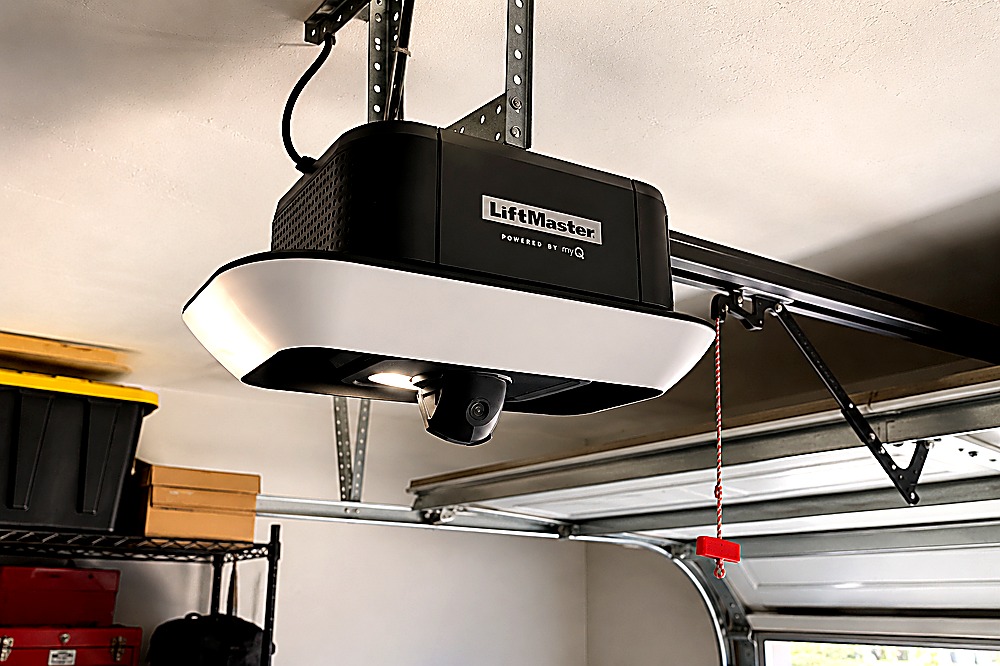
A ceiling-mounted LiftMaster belt-drive garage door opener with manual release cord in a Bay Area garage
San Francisco Bay Area — Opener Repair Specialists

Garage Door Opener Repair
Won't Respond, Reverses, or Grinds? We'll Fix It.

When a garage door opener stops cooperating, the cause is often simpler — and cheaper — than a new motor. We diagnose the real fault, from stripped gears and misaligned sensors to a door that's making the opener overwork, across the Bay Area, usually the same day, with a free estimate and upfront pricing.

Same-Day
Service
Free
Estimates
Upfront
Pricing
All
Major Brands
Insured & Bonded
General Liability Insurance
Workers' Comp Covered
Upfront Pricing
Free Estimates
LiftMaster, Chamberlain & Genie
Quick Answer

Garage door opener repair fixes the motor unit that drives your door open and closed — addressing faults like a stripped drive gear, misaligned safety sensors, a failed capacitor or logic board, or worn travel settings. Often a struggling opener is actually a sign the door itself is binding, so the door's balance has to be checked too. We repair all major opener brands across the Bay Area, usually same day, with free estimates and upfront pricing approved before any work begins.

Symptoms

Is This Your Opener? Common Warning Signs

Opener trouble shows up in a handful of recognizable ways. Match what your opener is doing to the signs below — it usually points straight at the part that needs attention.

!
The motor runs but the door doesn't move
You hear the opener running, but nothing happens. Usually a stripped drive gear or a trolley that's disconnected from the carriage — a common, repairable wear item.
!
The door reverses before or after it closes
Almost always the safety sensors near the floor — bumped out of alignment, dirty, or beam-blocked — or a close-force / travel-limit setting that needs resetting.
!
It hums or clicks but won't start
A humming motor that won't turn over often points to a failed capacitor — or a door so jammed the opener can't move it. We confirm which before replacing anything.
!
The remote or keypad stopped working
Often a dead remote battery or lost programming. If the wall button still works, it's usually the remote; if nothing works, it may be the logic board or antenna.
!
It stops partway or works only sometimes
Intermittent operation or stopping mid-travel usually means force/limit settings, a worn gear, or — frequently — a door that binds at the same spot every time.
!
Loud grinding, rattling, or sudden noise
Grinding with no movement is a classic stripped gear; rattling and slapping is often a loose chain or belt and worn rail hardware that's overdue for service.
How We Diagnose It

Is It the Opener — or the Door?

The most important question on an opener call isn't which part of the motor failed — it's whether the opener is the problem at all. A binding door or weak springs makes a healthy opener strain and quit, so we check that first before quoting any opener part.

1
Door first, motor second
We disconnect the opener and move the door by hand. If it's heavy, sticks, or won't hold position, the springs or track — not the motor — are making the opener overwork. Replacing the opener wouldn't fix that.
2
Sensors, settings & controls
We check the photo-eye safety sensors, travel limits, and close force, then test the remote, keypad, and wall control — the causes behind most "won't close" and "won't respond" calls.
3
Drive & mechanical check
We inspect the gear, belt or chain, trolley, and rail. After any repair we run the door and confirm it reverses safely on contact, the way a properly working opener must.
Why Openers Fail

What Actually Goes Wrong With an Opener

Openers rarely die all at once. Knowing the usual failure points helps you understand the repair — and why a quick fix on the door sometimes saves the motor.

Stripped drive gear
The most common opener repair we do. The main drive gear is often plastic and wears with use; when it strips, the motor runs but the door doesn't move. Replacing the gear is usually far cheaper than the whole unit.
Forced to lift a heavy door
An opener is sized to nudge a balanced door, not carry it. Weak springs or a binding door make it strain on every cycle, and that overload is what wears gears and motors out years early — the failure we trace back to the door most often.
Misaligned or dirty safety sensors
The little photo-eyes near the floor cause more "won't close" calls than the motor ever does. A bumped bracket, a dirty lens, or a blocked beam tells the opener to reverse — an easy fix mistaken for a dead opener.
Failed capacitor
The capacitor gives the motor its starting kick. When it fails, you get a hum or buzz but no movement. It's an inexpensive part on most units — once we've confirmed the door isn't the real cause.
Logic board or circuit failure
Power surges and age take out the control board, causing dead or erratic behavior. On a newer opener it's worth repairing; on an older one, board availability often tips the decision toward replacement.
Worn rail, trolley & drive hardware
A loose chain or belt, a worn trolley, or a dry rail makes an opener noisy, jerky, and slow. Often it's a service-and-adjust fix rather than a replacement.
The Right Repair

Repaired, Tested, and Reversing Safely

A proper opener repair isn't just swapping a part — it's confirming the door is balanced, the sensors are aligned, the travel and force are set correctly, and the door reverses on contact. That's what makes the fix safe and lasting.

A repaired ceiling-mounted belt-drive garage door opener tested and operating in a Bay Area garage
Honest Comparisons

Two Decisions Worth Understanding

Before you spend a dollar on opener parts, two questions decide the right move: is the opener even the problem, and if it is, should you repair or replace it? Here's our straight answer to each.

Is it the opener or the door?

This is the call that saves people the most money. A large share of "my opener is dying" visits turn out to be a door problem — a broken or weak spring, a door off its track, or worn rollers — forcing the opener to do work it was never meant to do.

Buy a new opener for a heavy door and you'll wear that one out too. Fix the door and a healthy opener often has years left.

Our straight take from the field: we test the door by hand before quoting an opener — because the cheapest opener repair is sometimes a spring or track fix, not a motor.
Repair vs. replace the opener

If the opener is under roughly ten to fifteen years old and the fault is a gear, capacitor, sensor, or setting, repair is the clear, cheaper choice. Replacement makes sense when the logic board is gone on an older unit, parts are discontinued, or the opener predates modern safety sensors.

If you're replacing anyway, battery backup is worth it where power shutoffs happen — and California now requires it on new openers.

Our usual recommendation: repair a sound, modern opener; replace an old one whose board has failed — and add battery backup if you're in a PSPS-prone area.
Upfront Pricing

How We Price an Opener Repair

No surprise invoices. Every opener repair starts with a free estimate and an upfront, written quote you approve before we touch the unit. Rather than post a single number that may not fit your situation, here are the honest factors that shape it.

The actual fault
A gear, capacitor, sensor, or remote is an inexpensive fix; a logic-board failure costs more. We diagnose the real cause before quoting.
Repair vs. replace
Repairing a sound opener is cheaper than a new unit. We'll show you when replacement is genuinely the better value, but the choice is yours.
Opener type & brand
Chain-drive, belt-drive, and wall-mount (jackshaft) units use different parts. Common residential brands are usually quick; rare parts may need sourcing.
Whether the door needs work too
If the real cause is a heavy or binding door, that repair is separate — and fixing it is often what protects the opener going forward.
New opener features, if replacing
Battery backup and Wi-Fi smart models cost more than a basic unit. We match features to how you actually use the door, not the spec sheet.

The bottom line: you get a free estimate, an upfront price approved before any work begins, and no surprises on the invoice.

Opener Acting Up? Get a Free Estimate Today
Same-day garage door opener repair across the Bay Area — all major brands, diagnosed honestly, with upfront pricing and no surprise fees.
Call 650-993-1457 Request Online Estimate
Opener Repair FAQ

Garage Door Opener Repair Questions

Straight answers to the questions Bay Area homeowners ask us most about garage door openers that quit, reverse, or act up.

Why won't my garage door opener work?
The most common causes are a stripped drive gear, misaligned or dirty safety sensors, a failed capacitor, worn travel or force settings, or a dead remote — but a surprising number of "opener" problems are actually the door. A binding door or weak springs make the opener strain and give up, so we check the door's balance first, because a new opener won't fix a heavy door. We diagnose the true cause on site before quoting.
Why does my garage door reverse before it closes?
A door that starts down then reverses is usually the safety sensors, not the motor. The two photo-eye sensors near the floor can be bumped out of alignment, dirty, or have a blocked beam, and the opener reverses as a safety measure. It can also be the close-force or travel-limit setting. We realign and clean the sensors, reset the limits, and confirm the door reverses correctly on contact.
My opener runs but the door won't move — what's wrong?
If the motor hums or runs but the door stays put, the drive gear is usually stripped — a common, repairable wear item on chain and belt openers — or the trolley has disconnected from the carriage. It can also mean the door itself is jammed or off its track and the opener can't move it. We confirm whether it's the opener's drive or the door before recommending a fix.
Is it cheaper to repair or replace a garage door opener?
If the opener is under roughly ten to fifteen years old and the fault is a gear, capacitor, sensor, or setting, repair is almost always the cheaper, sensible choice. Replacement makes sense when the logic board has failed on an older unit, parts are discontinued, or the opener predates modern safety sensors. If you're replacing anyway, a new opener with battery backup is worth it in areas prone to power shutoffs — and in California, battery backup is required on new openers.
How long do garage door openers last?
A garage door opener typically lasts about ten to fifteen years, depending on how often it's used and whether the door it lifts is kept balanced. An opener forced to work against weak springs or a binding door wears out years early, which is why we check door balance during an opener repair — fixing the door is often what makes the next opener last.
Can you repair any brand of garage door opener?
We service the major opener brands — including LiftMaster, Chamberlain, Genie, and others — across chain-drive, belt-drive, and wall-mount (jackshaft) models. We carry common wear parts like gears, capacitors, sensors, and remotes for typical residential units, and we'll tell you on site whether a part is available or whether replacement is the better call.
My remote stopped working — is that the opener?
Often it's the simplest thing first: a dead remote battery or lost programming. If the wall button still works but the remote doesn't, it's usually the remote or its programming; if nothing works, it may be the opener's logic board or antenna. We test the remote, keypad, and wall control together so we fix the actual cause rather than just reprogramming around it.
Do you install battery backup or smart Wi-Fi openers?
Yes. When an opener needs replacing, we can install models with battery backup so the door still works during a power outage — which California now requires on new residential openers — and Wi-Fi smart openers you can operate and monitor from your phone. We'll match the opener to your door's weight and how you use it rather than upselling features you won't need.
Do you repair garage door openers in my area?
We repair and replace garage door openers across the San Francisco Bay Area, including San Jose, San Francisco, Palo Alto, Redwood City, Mountain View, and the surrounding Peninsula, South Bay, and North Bay communities. Call us with your opener's symptoms and we'll confirm same-day availability.
Where We Work

Same-Day Opener Repair Across the Bay Area

We repair garage door openers throughout the Bay Area. Find your city below for local same-day service, or see all of our garage door services.

Get in Touch

Get My Free Opener Estimate

Same-day opener repair available across the Bay Area. Free estimates and upfront pricing on every opener diagnosis and repair — no obligation, no pressure. Call 650-993-1457 or send the form and we'll confirm your visit.
📞
Phone
Same-day opener service available — call anytime
Email
We respond within a few hours during business hours
📍
Service Area
San Francisco Bay Area
South Bay, Peninsula, San Francisco, North Bay, and surrounding communities
📅
Hours
7 Days a Week
Same-day appointments available — including weekends
Last updated: June 2026